


CLUETT, PEABODY & CO.
Estd. 1851
Originally founded in Troy, New York as Maullin & Blanchard, the firm evolved through successive partnerships before becoming Cluett, Peabody & Co. in 1899.
By the mid-20th century, Cluett was the world's largest shirt maker, operating over a dozen factories, and producing nearly 100,000 dozen shirts per week.
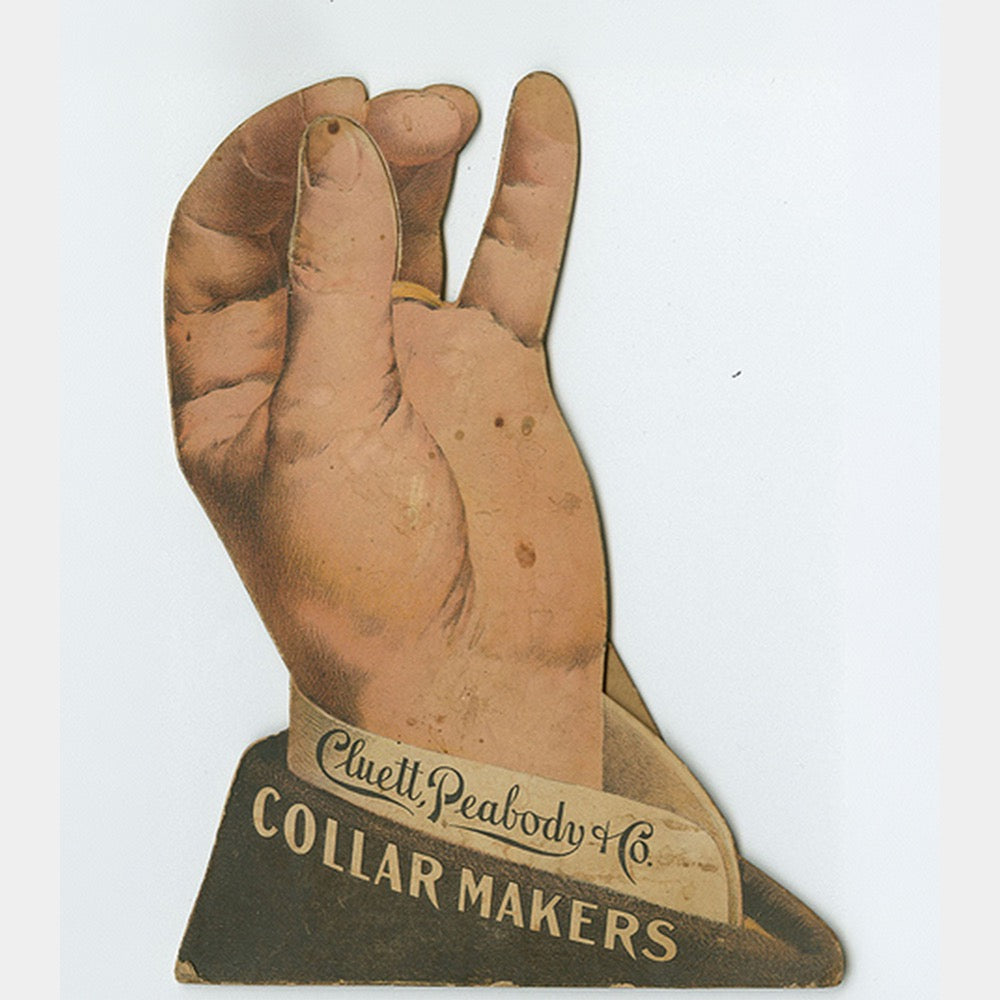
COLLAR MAKERS
1851
Cluett, Peabody & Co. established its reputation in producing detachable collars — starched, structured, and essential to the dress of the age.
It was here that precision, durability, and an understanding of form first took hold.
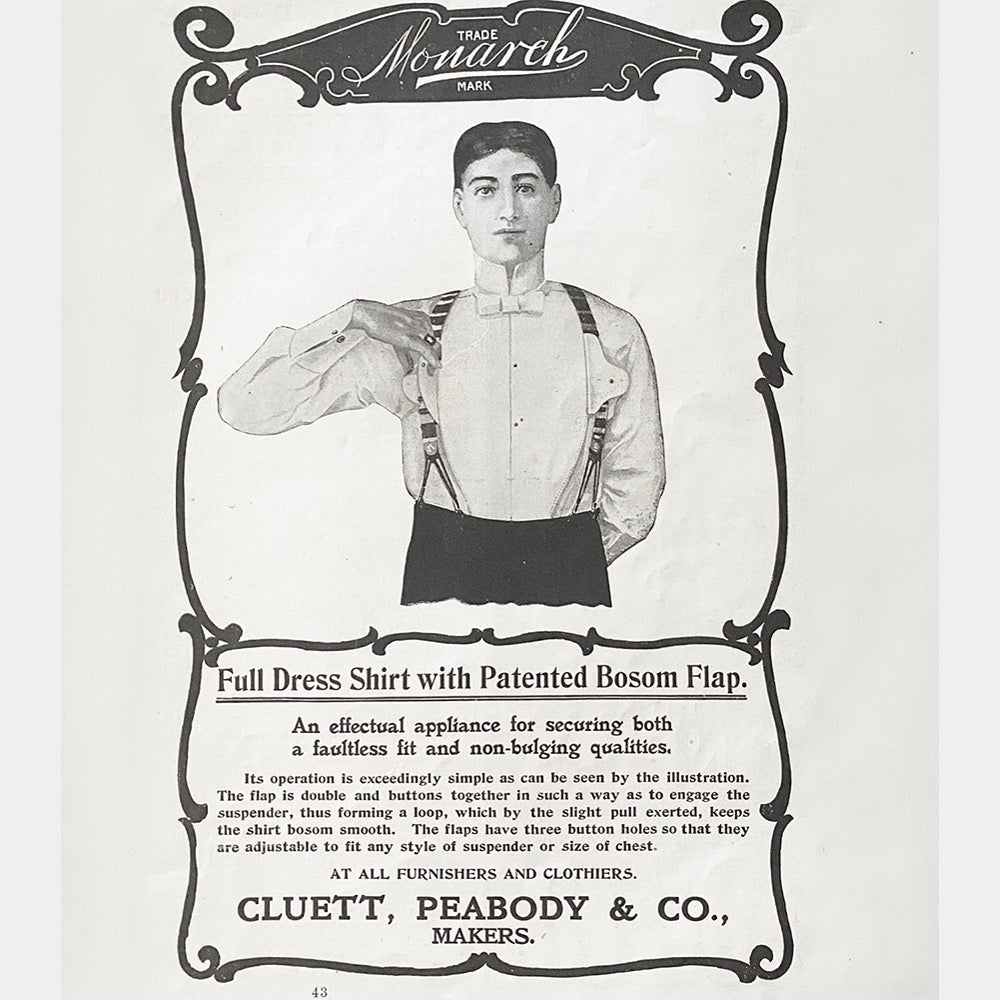
SHIRT MAKERS
1873
By 1873, the company had expanded beyond the collar into shirt making.
Collars and cuffs, however, remained detachable — starched and replaced as needed — while the shirt itself evolved beneath them. A system of refinement, built in parts.
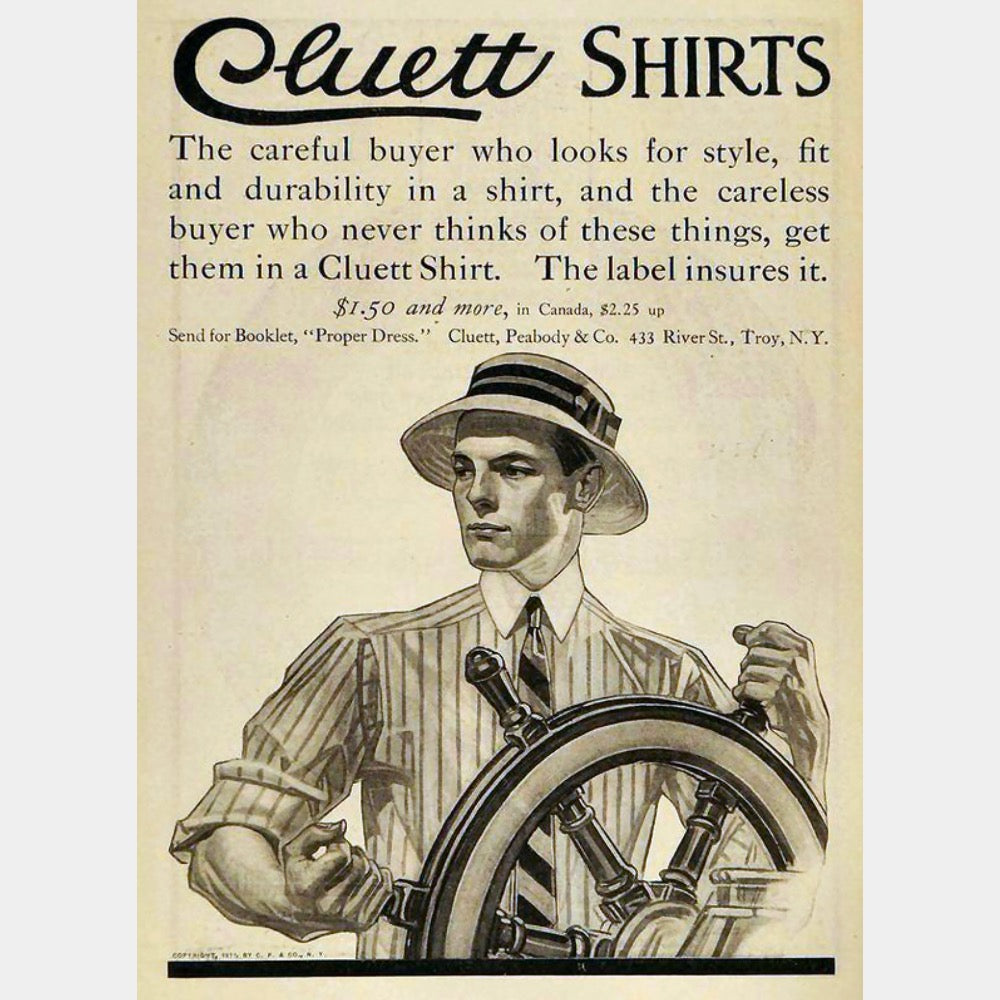
IMAGE MAKERS
1905
From 1905 until the 1930s, Cluett, Peabody & Co. employed the services of America's pre-eminent illustrator, J.C. Leyendecker.
With Leyendecker, Cluett did not just advertise — it illustrated aspiration. His men defined an era: confident, composed, and unmistakably modern in both dress and manner.

TASTE MAKERS
1911
The Cluett Donchester dress-shirt set the tone — formal, assured, and quietly influential.
Cluett became shorthand for good taste, worn by men who understood the difference without needing explanation.
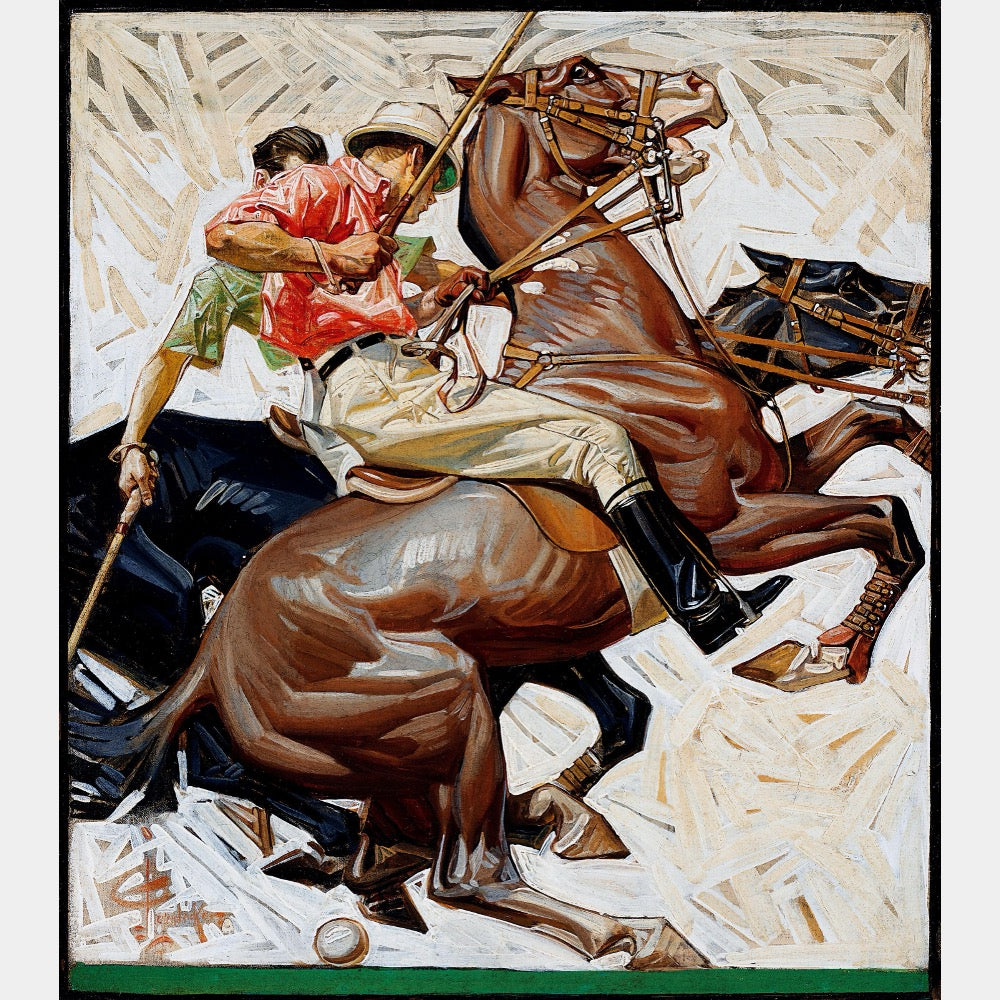
STYLE MAKERS
1914
From eveningwear to the polo field, Cluett followed the modern man in motion.
Style was no longer static — it lived, moved, and adapted with the rhythm of a new century.
Then, something softened...
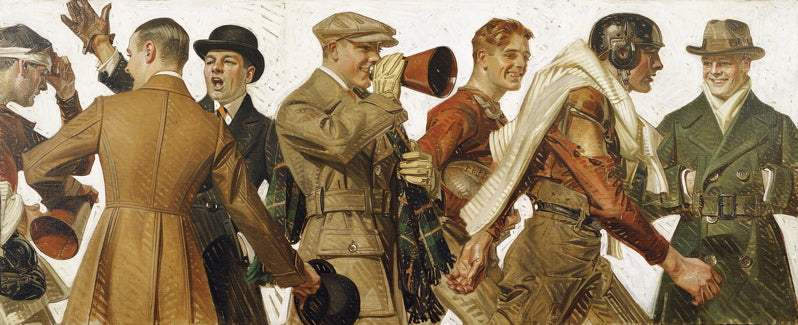
THE IVY LEAGUE
1920
Following the First World War, a new way of dressing emerged — less rigid, more lived-in. On campus and playing field, American sportswear began to take shape.
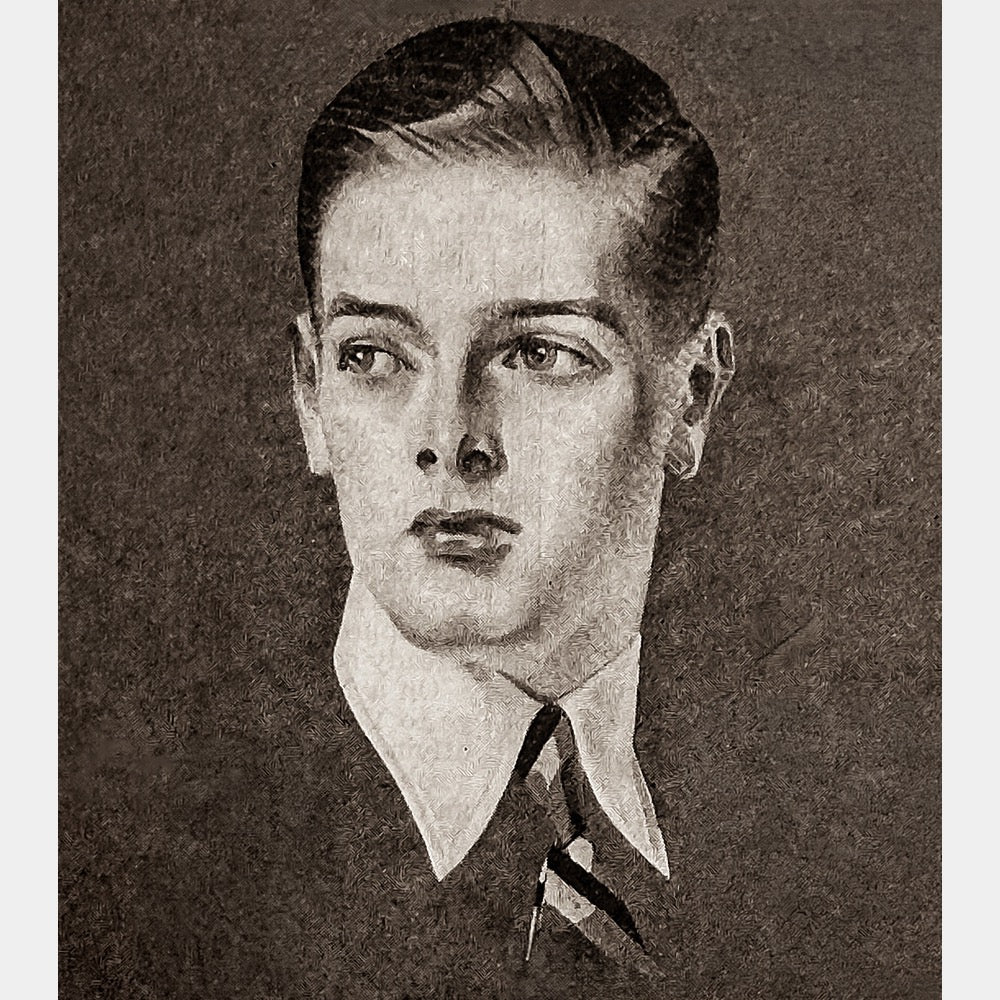
THE SOFT COLLAR SHIRT
TROY
The stiff, starched collar gave way to something softer — more relaxed, and worn with ease.
Cluett’s soft collar, named Troy, referenced the company’s birthplace and marked a new chapter: collars no longer separate, but attached.
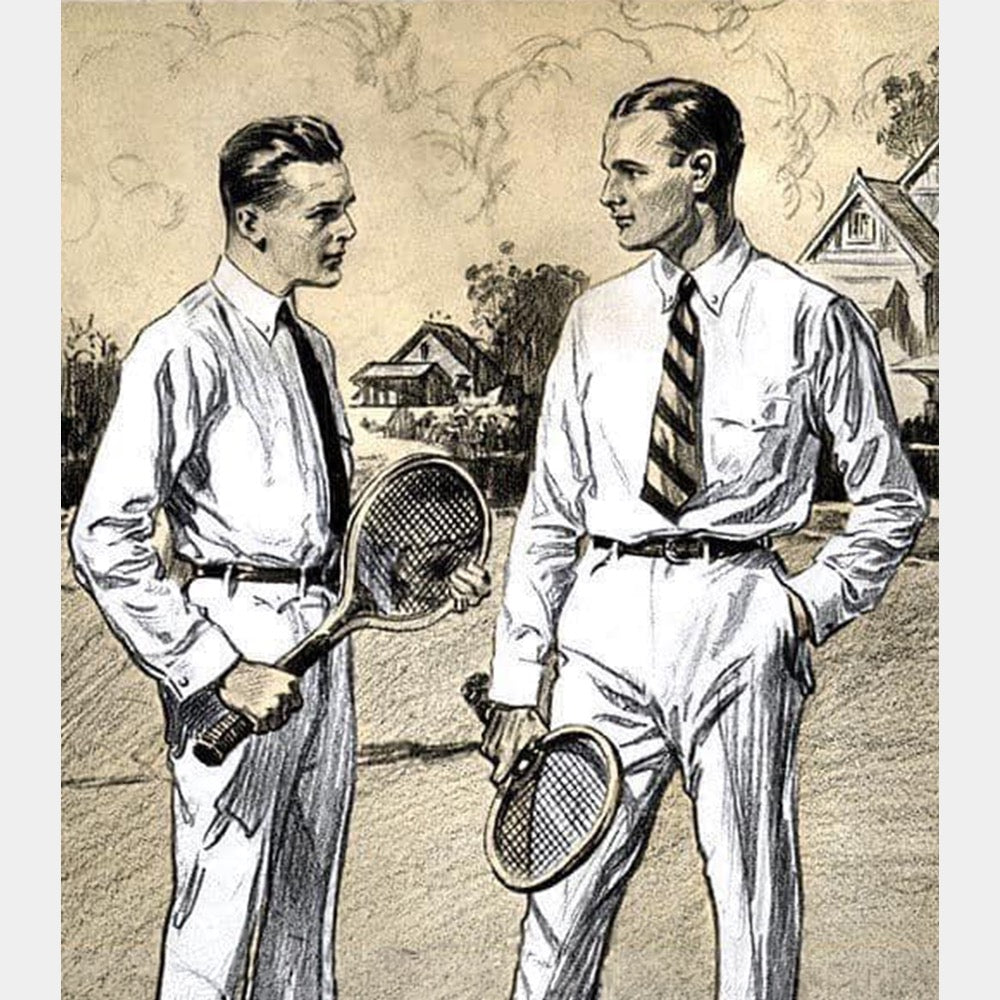
THE OXFORD CLOTH BUTTON DOWN
O.C.B.D.
Cluett’s Gordon model introduced a soft, unlined collar, buttoned down in the manner of the polo field and tennis court.
The Oxford Cloth Button Down became the foundation of a distinctly relaxed form of dress — one that continues to define the American wardrobe over a century later.
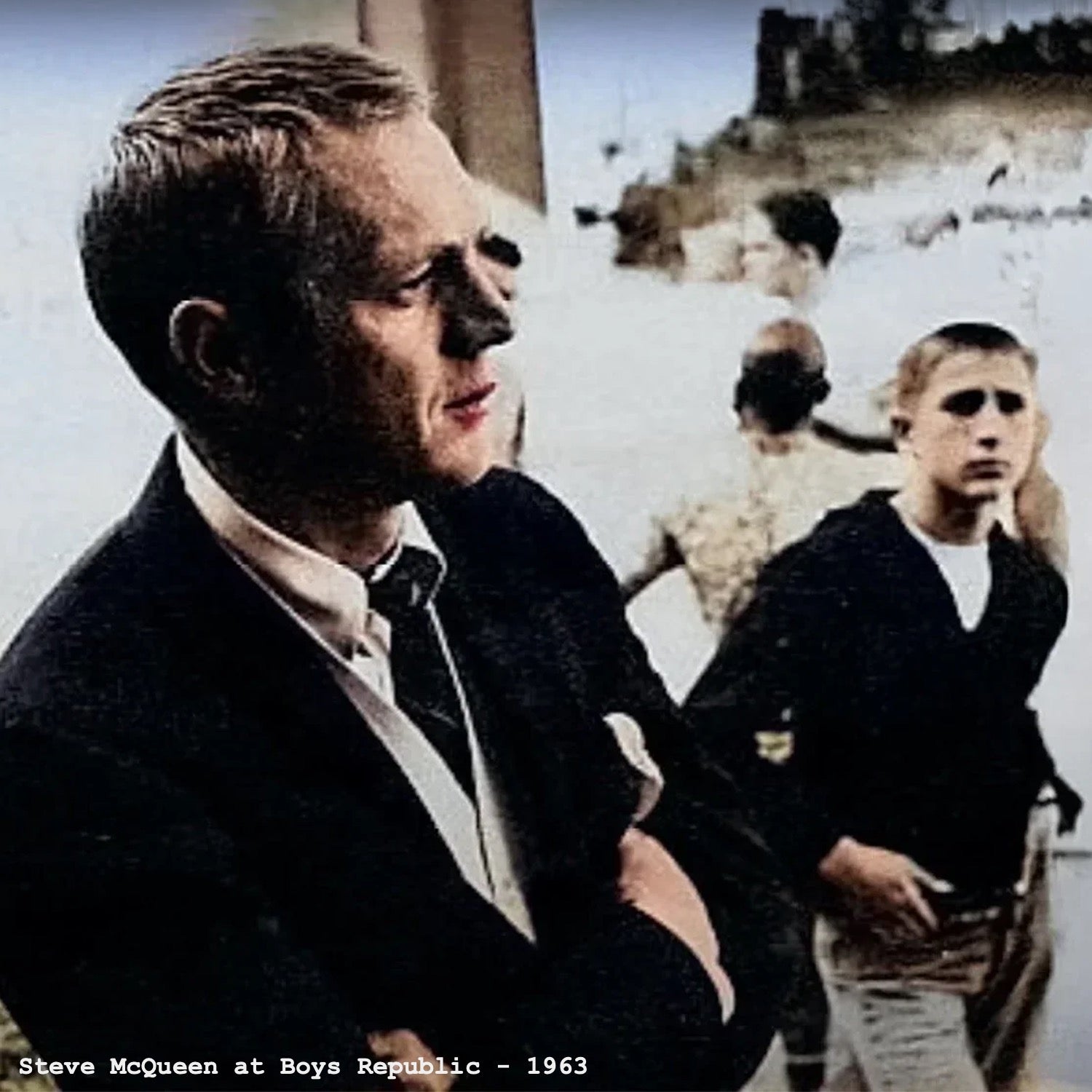
AN ESTABLISHED LOOK
1960s
By mid-century, the Oxford Cloth Button Down had settled into everyday dress — worn without ceremony, and without change.
It moved easily from campus to coast, adopted by a generation that defined its own style.
Among them, Steve McQueen.
Returning to the Roots

MADE IN USA
2026
Cluett has returned, with a definitive American shirt — 175 years in the making.
An Oxford Cloth Button Down, entirely grown, spun, woven, and made in the United States — completing a journey that begins in the ground, and ends at the collar.
